Skip to content

ABOUT EVERNIGHT REALMS

Built for stories that belong around a table

Evernight Realms creates tools that add light, motion and atmosphere to physical tabletop play—without replacing the terrain, miniatures or people around the table.

TabletopFX is being developed and tested around real gaming tables in Brisbane, Australia.

Where TabletopFX started

TabletopFX began with a practical problem: projection effects could transform a table, but setting them up repeatedly was too technical and too disruptive during play.

I wanted software that fitted around a real table—not a table that had to fit around the software.

That principle continues to guide how Evernight Realms approaches calibration, controls, local operation and product development.

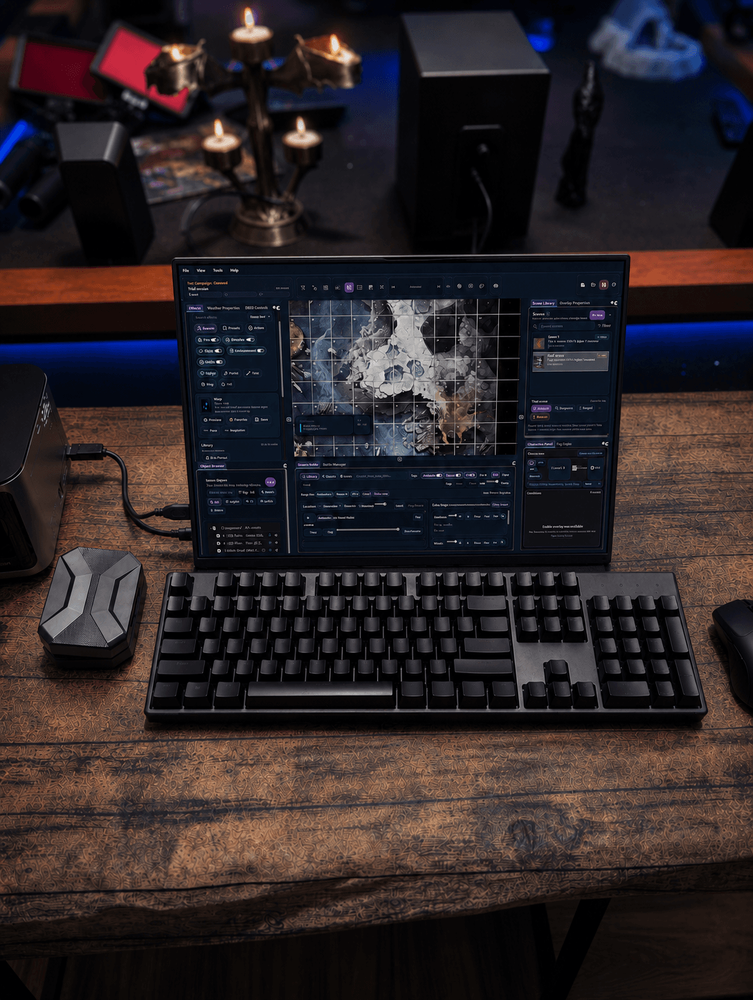
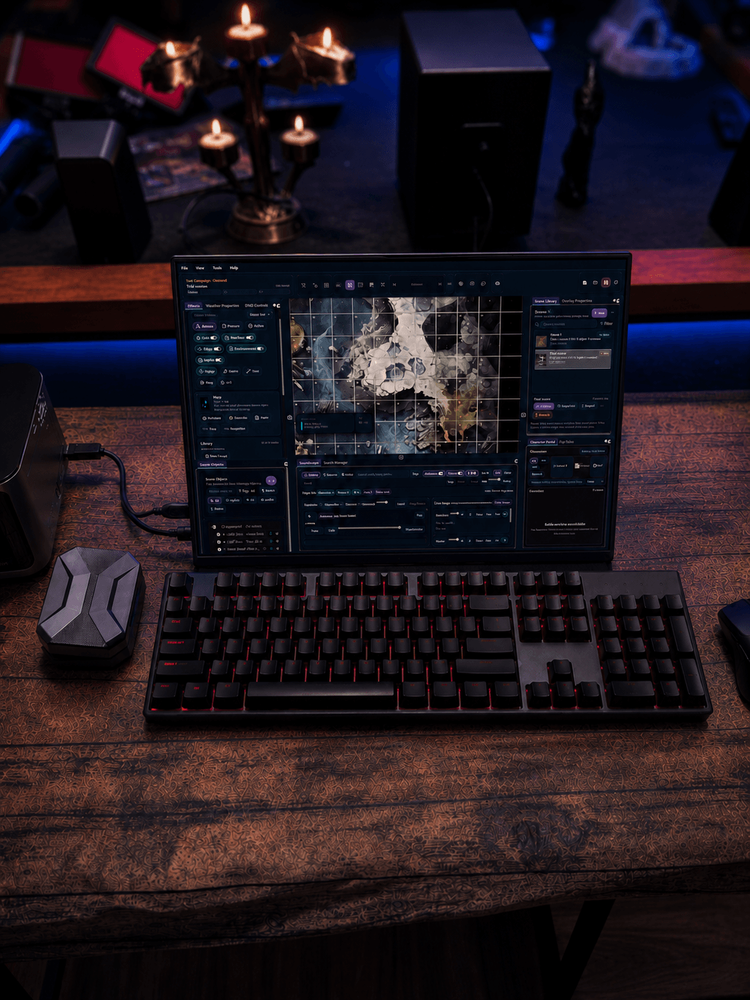
Laptop displaying the TabletopFX Game Master interface with a grid-aligned battlefield preview.
TabletopFX calibration and grid controls running from the Game Master's workstation.

Our principles

The table comes first

Technology should support the encounter without drawing attention away from the players, miniatures and Game Master.

Controls should be immediate

A live session is not the place for deep menus or lengthy setup. Common actions should remain visible, predictable and fast.

Calibration should be reusable

Projection setups vary, so alignment settings should be measurable, adjustable and saved rather than rebuilt from nothing each time.

Local play should remain dependable

Core effects should continue to work without relying on an online service during a session.

Development should be honest

Experimental features should be labelled as experimental. Planned features should not be advertised as completed ones.

The person behind Evernight Realms

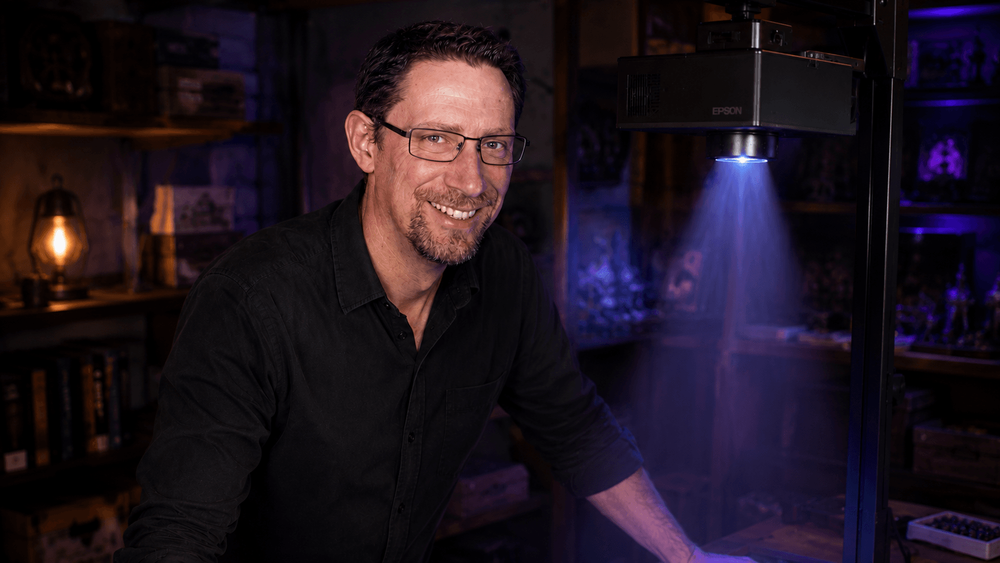
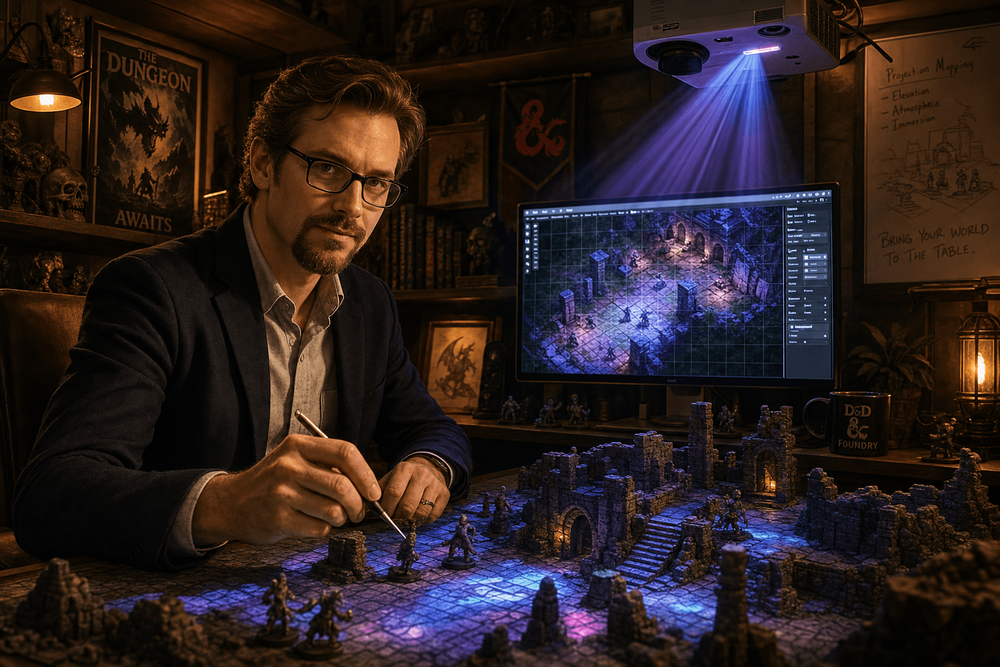
James Phillips standing beneath an overhead projector beside a tabletop projection test.
James Phillips, founder and developer of Evernight Realms, testing an overhead projection setup.

James Phillips

Founder and Developer

I am James Phillips, founder of Evernight Realms. I have spent years running physical tabletop games and building software, and I started this company because projection effects kept promising atmosphere but demanding too much setup at the table.

My background spans electrical and electronic engineering, software development, projection mapping, visual effects and live event production. That combination matters for TabletopFX: I care about measurable calibration, dependable local operation and controls a Game Master can reach for without breaking the flow of play.

I founded Evernight Realms to build tools that respect the physical game first—terrain, miniatures, dice and face-to-face conversation. TabletopFX is the first product, shaped by what I need at my own table and refined through testing with other Game Masters in Brisbane.

I am building toward practical software and accessories that help physical tabletop spaces work better, without asking players to stare at screens instead of each other.
Built and tested in Brisbane

Evernight Realms is based in Brisbane, Australia. TabletopFX is developed and tested in real hobby rooms, home setups and club tables—not as a slide deck or a concept video.

TabletopFX is tested across the practical conditions found in home games, hobby rooms and community tables: varying projector positions, ambient light, terrain materials and limited setup time.

The goal is straightforward: build software that works when a projector is slightly off-centre, when terrain changes between sessions, and when the Game Master needs to stay focused on the players.

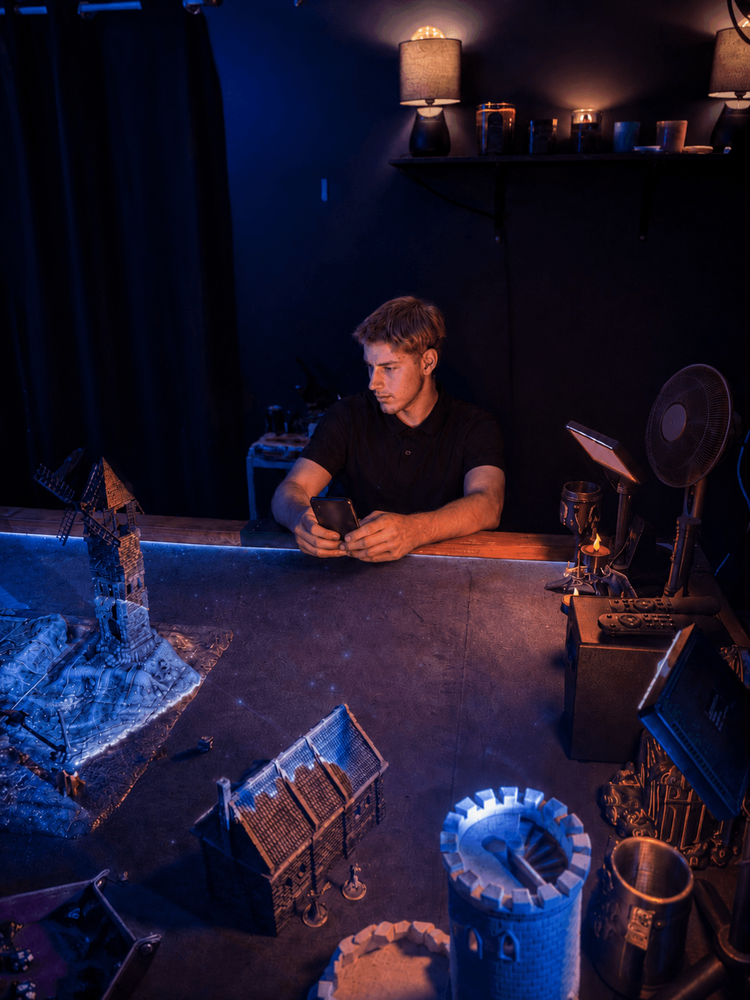
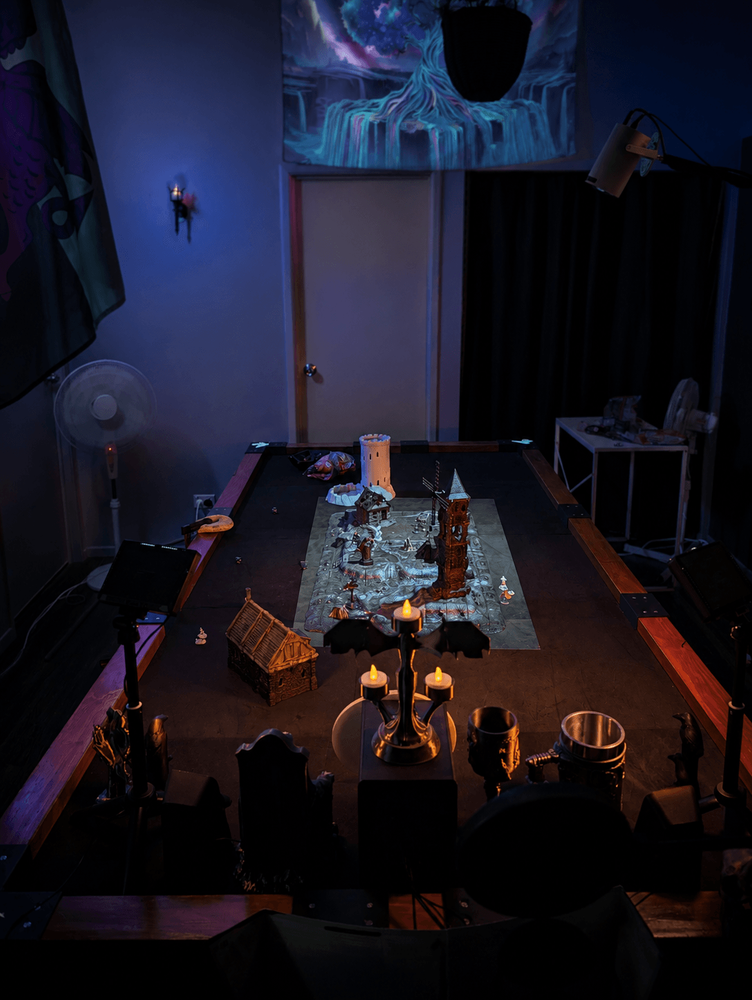
Players seated around a physical tabletop game illuminated by blue, violet and red lighting.
TabletopFX being tested during a real tabletop session in Brisbane.

From prototype to playtest

Development has moved through messy early experiments, repeatable calibration work and live table testing with feedback from other Game Masters. The images below are approximate phases—not manufactured milestones.

  1. EARLY PROTOTYPE

    A projector, a table and the first alignment experiments

    The first TabletopFX experiments focused on a simple question: could projected light and animation add atmosphere to physical terrain without replacing it? Early tests used basic projector output, handmade scenery and improvised mounting positions to understand brightness, scale, shadows and surface response. These prototypes were rough, but they established the core direction of the project—keep the miniatures and terrain physical, while using software to add movement, colour and environmental effects around them.

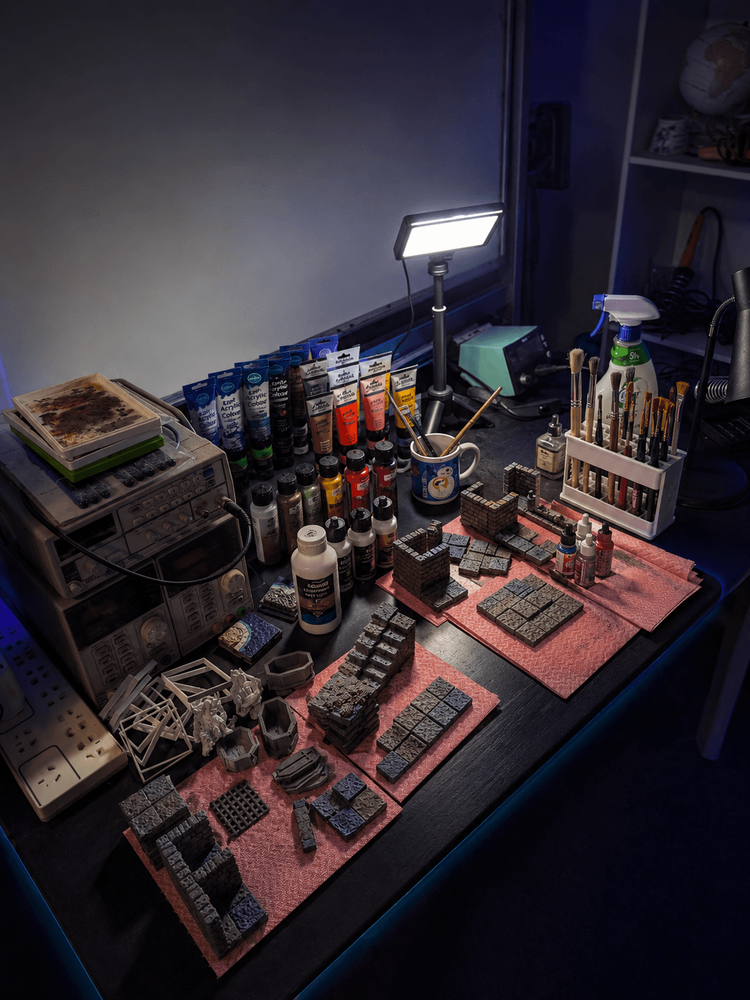
    Early Evernight Realms workshop with 3D printers, tools, books and terrain-making equipment.
    The early workshop: 3D printing, terrain experiments and hardware testing.
  2. REPEATABLE CALIBRATION

    Developing controls that can be saved and reused

    Once projection proved effective, the next challenge was making alignment practical. Every table, projector and room introduces different dimensions, angles and offsets, so TabletopFX began evolving from a visual experiment into a reusable calibration system. The current workflow supports physical table measurements, grid sizing, position, scale, rotation and four-corner perspective correction. Calibration settings can be saved locally, reducing the need to rebuild the setup from the beginning before every session.

    Laptop displaying the TabletopFX Game Master interface with a grid-aligned battlefield preview.
    TabletopFX calibration and grid controls running from the Game Master's workstation.
  3. TABLE TESTING

    Lighting, effects and sound operating during real play

    Table testing reveals problems that are difficult to find inside the editor alone. Effects must remain visible across textured terrain, controls need to be fast enough for live play, and the projected output must avoid distracting from miniatures and player interaction. TabletopFX is tested in real rooms with physical scenery, changing light conditions and different projector positions. Feedback from these sessions guides improvements to calibration, projected lighting, effect placement, performance and the overall Game Master workflow.

    Physical miniatures and ruined terrain illuminated by blue, violet and red projected effects.
    Projected lighting and animated colour operating across physical terrain and miniatures.

Beyond TabletopFX

TabletopFX is the first Evernight Realms product, but the broader goal is to develop practical tools and accessories for physical tabletop play—from projection and calibration systems to control accessories and small-batch products designed around real gaming spaces.